


What a Centra migration plan covers
We start with what your Centra setup actually does: products, variants, sizes and displays, markets and pricelists, wholesale and showroom, allocation rules, plugins and the frontend. Each part gets a decision: move it, rebuild it on Shopify, replace it with an app, keep it in a separate system or retire it. Then follow the URL map and redirects, the migration of products, customers and orders, tracking and feeds, and QA on real processes, from checkout to B2B orders.
PROVEN
RESULTS
TOTAL SALES VS. PREVIOUS PERIOD


What moves from Centra, and how
Centra stores every item as product, variant and size, and presents it through displays per store and market. We map each level to its Shopify counterpart before anything is imported:
Products, variants and sizes become a Shopify product with Colour and Size options. Shopify allows three options and 2,048 variants per product. If every colour has its own display and URL in Centra, each colour can stay a separate product, grouped with Combined Listings on Shopify Plus.
GTINs and stock per size and warehouse move to variants and locations. Centra’s product, variant and size IDs are kept in metafields, so ERP and feeds can still match.
Custom attributes on product, variant and display level become metafields. Categories, up to six levels deep in Centra, become collections and menus.
Customers, addresses and order history move. Passwords cannot be imported, so we plan activation emails or passwordless login. Orders go in through the Admin API, after products and customers.
The product export (Excel or CSV, one row per size) is the starting point. Orders and customers we read through Centra’s Integration API (GraphQL).
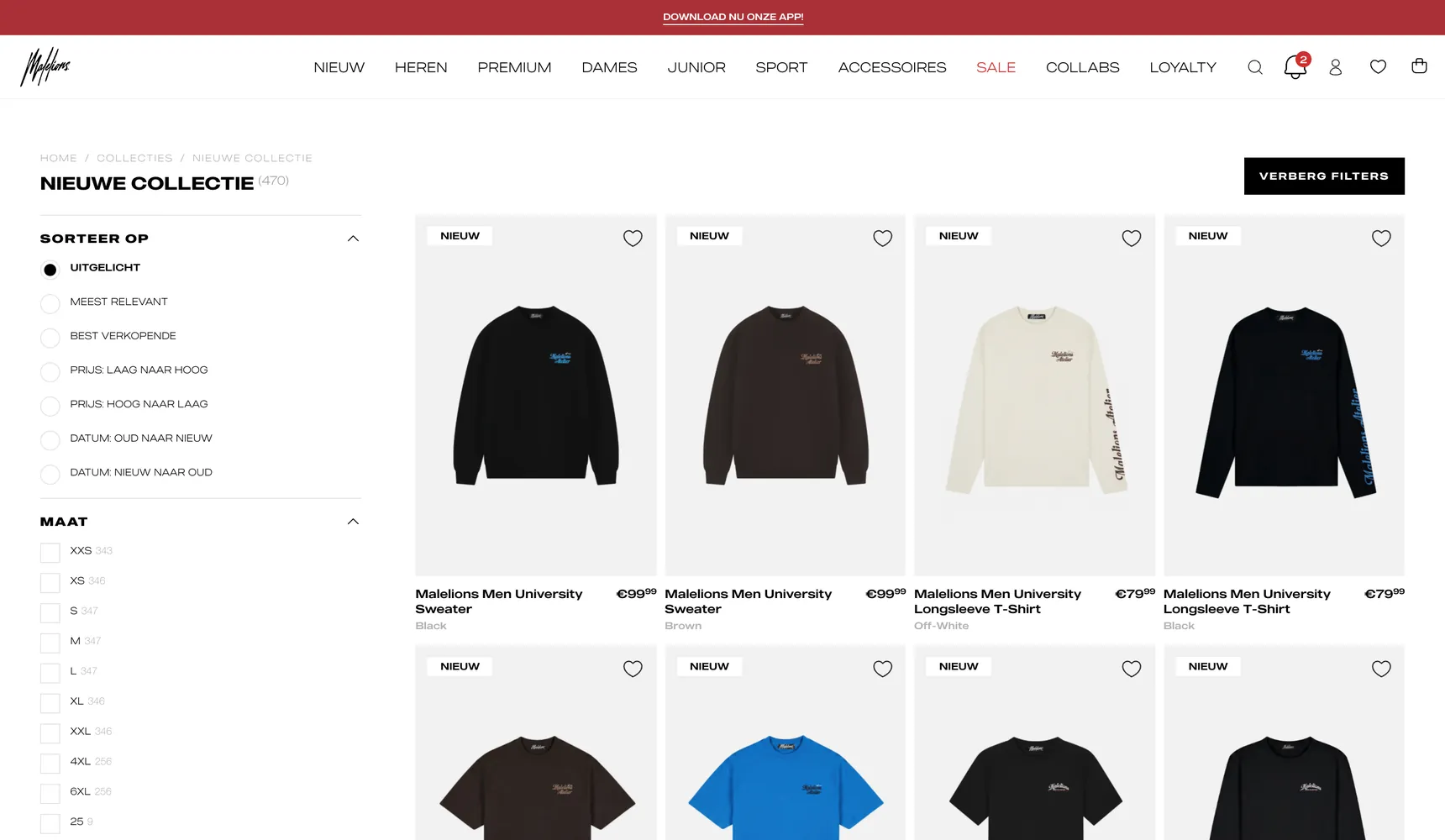
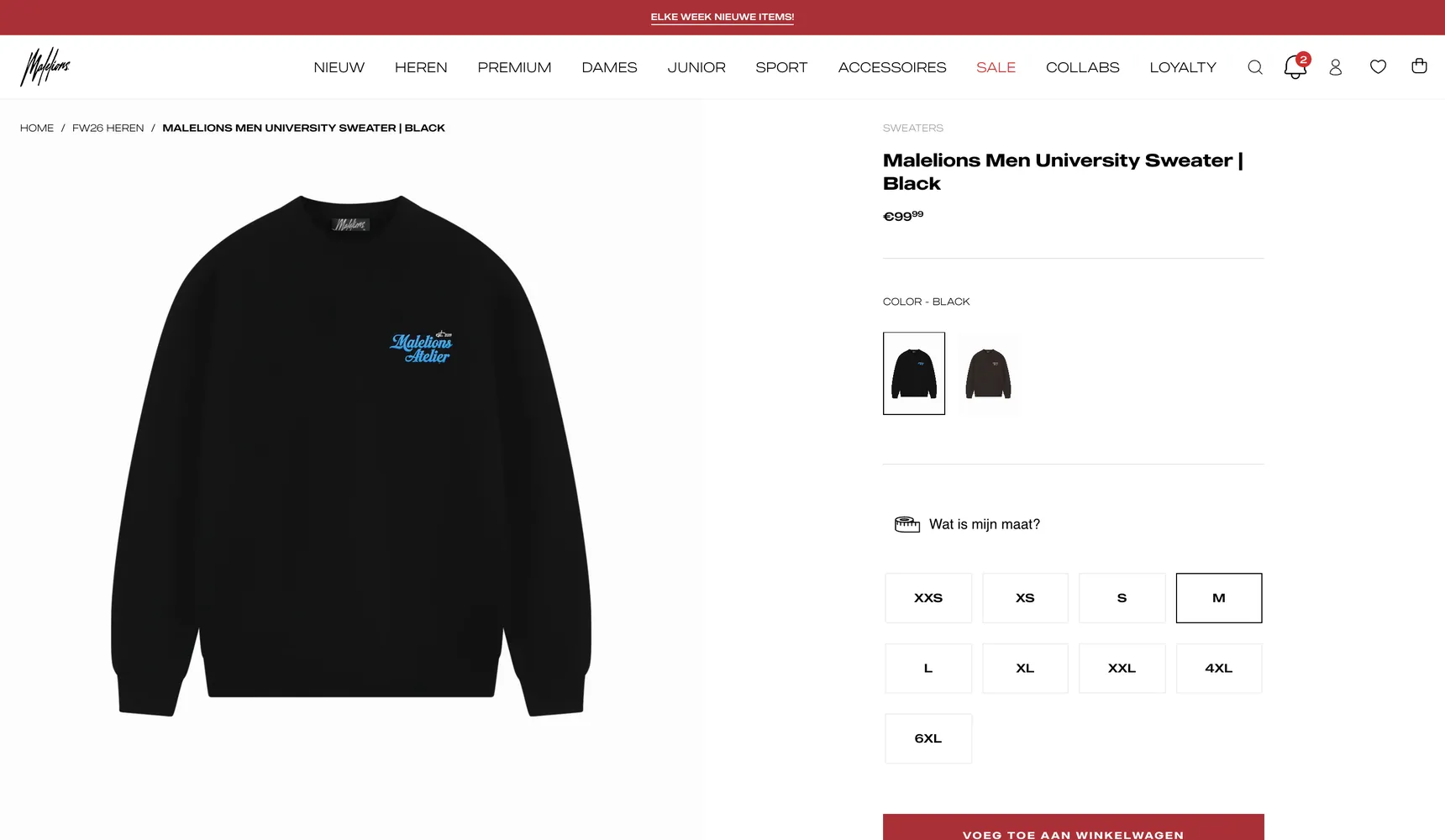
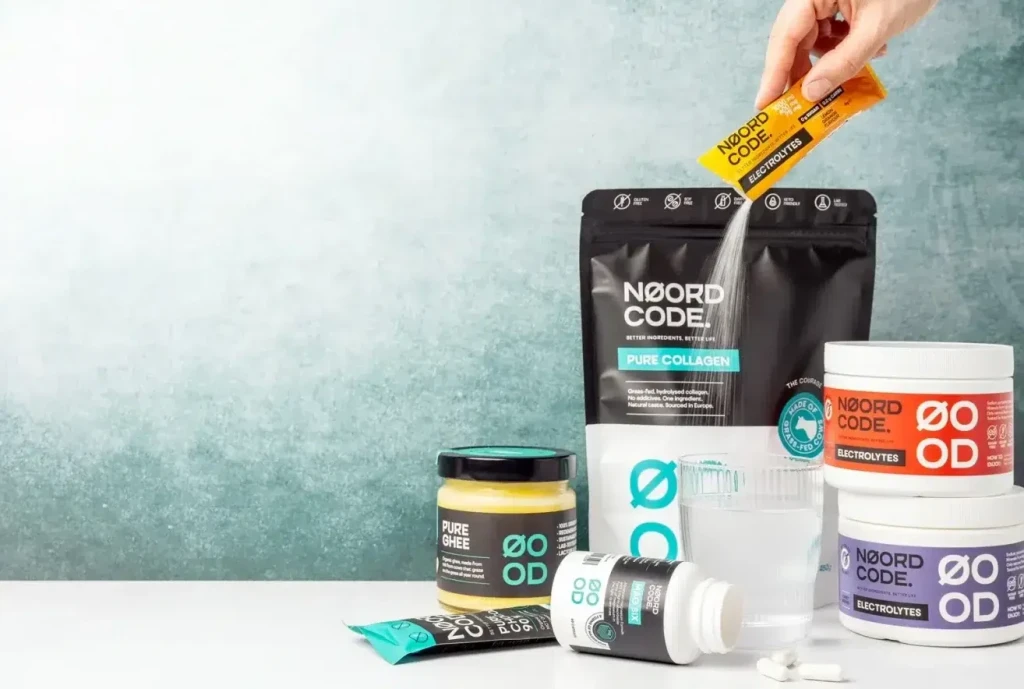
Fashion brands such as Malelions, OGÉR, Mason Garments and NØORDCODE. moved to Shopify with us from other platforms. Malelions alone brought more than 180,000 customers across. The same method applies to Centra.
For every step in detail, read our guide Centra to Shopify migration.
Wholesale, headless and integrations
Centra combines DTC and wholesale in one backend, with a digital showroom for pre-orders and reorders. On Shopify, B2B runs in the same store with companies, locations, catalogues, price lists and payment terms: three active B2B catalogues on Basic, Grow and Advanced, unlimited on Shopify Plus. A showroom with seasons, delivery windows and pre-order line sheets is not a standard Shopify object, so we decide per process: native B2B, an app, a custom app or a dedicated wholesale tool next to Shopify. More on Shopify B2B.
Centra is headless, so your current frontend is your own code. On Shopify you choose: a theme, which removes a codebase, or headless with Hydrogen or another framework on the Storefront API. See headless Shopify.
Centra’s allocation rules, by warehouse priority or with as few warehouses as possible, map to Shopify order routing with ranked locations and minimised split fulfilments. Connections with PIM, ERP, WMS and email tools such as Voyado get a data owner, sync frequency and error handling each, tested before launch. See PIM integration.
Shopify or Shopify Plus: which plan fits follows from the scan, not from your current licence. See what Shopify Plus adds for larger brands.
Centra URLs, markets and SEO
Centra has no fixed URL pattern: your frontend builds URLs from the display URI and the category, often with a market or language prefix. On Shopify, products live under /products/, categories under /collections/ and markets in subfolders such as /de-de/ or /en-se/. That makes the redirect map the most important SEO deliverable of the project:
We take the URI and canonical category from the Centra product export, and crawl the live frontend and sitemaps for every indexable URL.
Each colour display with its own URL gets its own target, never the homepage by default.
Market and language prefixes map to Shopify Markets subfolders or domains, with hreflang checked per market.
Meta titles and descriptions from the displays move along, or are improved on purpose.
After launch we compare per market and template, so a drop is found where it starts.
Shopify allows up to 100,000 redirects on its standard plans and 20 million on Shopify Plus, and only from URLs that return a 404. The old frontend usually goes offline with Centra, so the redirect map is built and tested before launch.
Approach
We work in fixed phases, so you know at every point what has been decided and what is still open:
Migration audit: products and displays, markets and pricelists, wholesale, integrations, URLs and processes, with scope and risks per decision.
Solution design: Shopify or Shopify Plus, theme or headless, data model, markets and the role of apps versus custom work.
Design and build, delivered in reviewable parts.
Trial migrations with real data, to measure completeness and duration.
QA on real processes: orders, payments, B2B orders, returns and tracking.
Cutover with data freeze, final sync and redirects, followed by monitoring after launch.
Plan backwards from your peak. To sell on Shopify on Black Friday 2027 (26 November), we count six weeks for the scan, four for scope, about twenty for build, migration and testing, and six for launch and hypercare, followed by a code freeze from early November. In practice: the decision has to be made in February 2027.
We migrate in three runs, never one: a dry run in a development store to find fields that arrive empty, a dress rehearsal with the full data set to time the import, and a delta run after the freeze. After launch our hypercare runs 90 days, starting with daily checks of orders per hour, checkout conversion, failed payments per method, 404s and support tickets.
Brands we moved to Shopify Plus



Planning to leave Centra?
Tell us how many markets and warehouses you run, how large your wholesale channel is, whether you want a theme or stay headless, and your timing. We reply with a first view on scope, risks and the route to Shopify, and suggest a short call to walk through it.


