AMS01:00
AMS01:00
AMS01:00

eCommerce ﹥ Headless Shopify

HEADLESS SHOPIFY WHEN THE THEME LAYER RUNS OUT

Headless is a trade: more control over the front end in exchange for more responsibility. We build Hydrogen and custom storefronts for brands whose experience, performance or content model no longer fits a theme, and we say so when a theme is still the better answer.

eCommerce ﹥ Headless Shopify

HEADLESS SHOPIFY WHEN THE THEME LAYER RUNS OUT

Headless is a trade: more control over the front end in exchange for more responsibility. We build Hydrogen and custom storefronts for brands whose experience, performance or content model no longer fits a theme, and we say so when a theme is still the better answer.

eCommerce ﹥ Headless Shopify

HEADLESS SHOPIFY WHEN THE THEME LAYER RUNS OUT

Headless is a trade: more control over the front end in exchange for more responsibility. We build Hydrogen and custom storefronts for brands whose experience, performance or content model no longer fits a theme, and we say so when a theme is still the better answer.

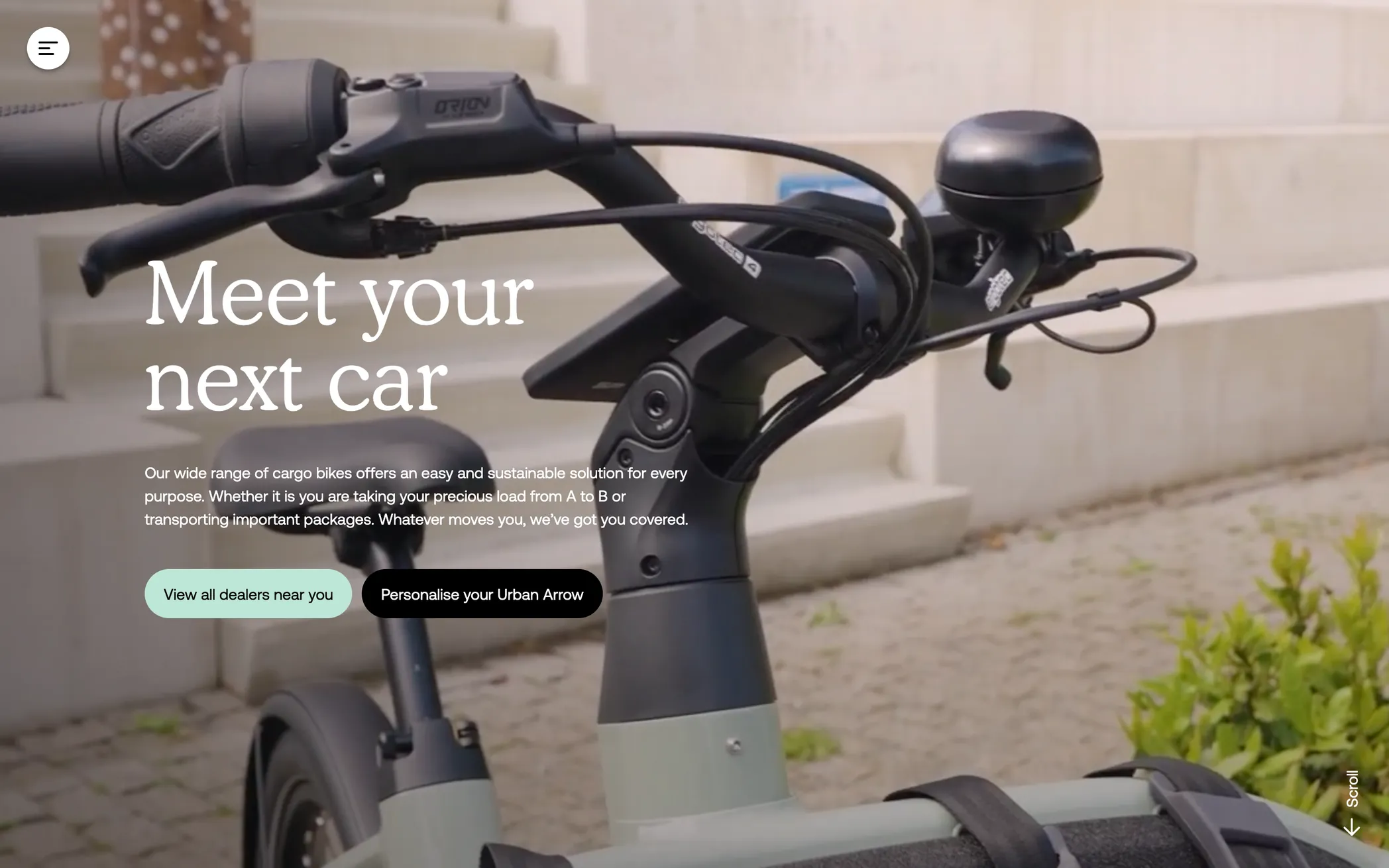
Urban Arrow homepage on desktop
Urban Arrow homepage on mobile
Section of the Urban Arrow homepage
Another section of the Urban Arrow homepage

Headless is not automatically faster

A headless storefront removes theme constraints, and adds a build pipeline, a hosting story, a preview environment and a team that has to maintain all three. It pays off when the front end is genuinely a product. When the real problem is a slow template or a bloated app stack, fixing that is cheaper and faster than replatforming the front end.

PROVEN
RESULTS
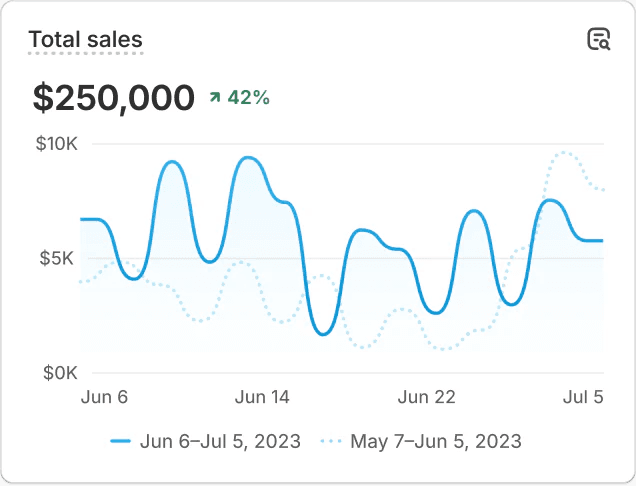
Shopify total sales chart showing 42 percent growth

TOTAL SALES VS. PREVIOUS PERIOD

+42%

+42%

+42%

+42%

+42%

+42%

Three men in summer fashion on a harbour quay

We build and grow digital platforms for brands that expect their commerce to perform, from fashion and beauty to mobility and consumer electronics. These are some of the companies we work with.

We build and grow digital platforms for brands that expect their commerce to perform, from fashion and beauty to mobility and consumer electronics. These are some of the companies we work with.

We build and grow digital platforms for brands that expect their commerce to perform, from fashion and beauty to mobility and consumer electronics. These are some of the companies we work with.

When headless is worth the responsibility

Attendees listening to a talk at a Flatline eCommerce event
Office entrance with a glass meeting booth
Two colleagues discussing work at their desks

Global disruptor in custom development & end-to-end production partner

WHEN HEADLESS FITS

Headless earns its cost when you need a front end no theme can express, when content comes from several systems, when performance targets are contractual, or when your team ships front-end work continuously and a theme is in the way.

Family with two young children next to an electric cargo bike in front of a townhouse

When headless is worth the responsibility

Attendees listening to a talk at a Flatline eCommerce event
Office entrance with a glass meeting booth
Two colleagues discussing work at their desks

Global disruptor in custom development & end-to-end production partner

WHEN HEADLESS FITS

Headless earns its cost when you need a front end no theme can express, when content comes from several systems, when performance targets are contractual, or when your team ships front-end work continuously and a theme is in the way.

Family with two young children next to an electric cargo bike in front of a townhouse

When headless is worth the responsibility

Attendees listening to a talk at a Flatline eCommerce event
Office entrance with a glass meeting booth
Two colleagues discussing work at their desks

Global disruptor in custom development & end-to-end production partner

WHEN HEADLESS FITS

Headless earns its cost when you need a front end no theme can express, when content comes from several systems, when performance targets are contractual, or when your team ships front-end work continuously and a theme is in the way.

Family with two young children next to an electric cargo bike in front of a townhouse
Urban Arrow headless Shopify storefront

Shopify’s headless stack in practice

In a headless setup Shopify stays the commerce engine and the front end becomes your own application. Shopify provides the building blocks. The checkout remains Shopify’s own and is customised through checkout extensibility rather than rebuilt. That limits risk in the payment flow, but it also means part of the customer journey stays outside your front-end code.

  • Hydrogen: Shopify’s React-based framework for custom storefronts

  • Oxygen: Shopify’s hosting for Hydrogen, with preview deployments per change

  • Storefront API: products, collections, cart, search and market context via GraphQL

  • Customer Account API: login, order history and account data in a headless storefront

  • Checkout: hosted by Shopify, extended with checkout UI extensions (Plus only in the checkout steps) and Shopify Functions

  • Metaobjects or a headless CMS for editorial content

Hydrogen is not the only option. A framework such as Next.js on the Storefront API can fit better, for example when your team already works with it or when other applications share the same front end. We choose the stack based on team, content model and hosting requirements, not on preference.

What you take on with headless

A theme does things you only notice once they are gone. In a headless build, the theme editor, many theme-based apps and part of the standard storefront behaviour no longer apply. Each of them needs an alternative, and each alternative is code or a service that someone has to maintain.

  • Apps built on theme app extensions need an API-based alternative or custom work

  • Merchandisers work in a CMS or with metaobjects instead of the theme editor

  • Hydrogen offers utilities for sitemaps, robots.txt and redirects; canonicals, structured data and the rest are built and tested

  • Analytics, consent and tracking are implemented in the front end and tested again

  • Markets and languages run through Storefront API context and routing

  • Previews, deployments and monitoring become part of your release process

Before the build starts, we check every app and integration in the current store against the headless architecture. That way reviews, search, personalisation or loyalty tools do not turn out to be theme-only halfway through the project. The cost of replacing them belongs in the decision, not in the surprises afterwards.

When a theme still wins

Modern Shopify themes are more flexible than their reputation. Sections on every page, metafields and metaobjects for structured content, and theme app extensions cover a large share of what brands ask headless to solve. Speed problems are more often caused by apps, scripts and heavy media than by the theme architecture itself.

If the goal is a distinctive design, a well-built custom theme through Shopify store design is usually faster to launch and cheaper to maintain. If the goal is conversion, CRO on the existing theme gives answers sooner. Headless makes sense when the front end itself is the product, and the team to maintain it is already in place.

Product data can also decide the question. When content from a PIM, a CMS and Shopify has to come together on one page in ways a theme cannot model, headless becomes more attractive. We weigh that against the extra responsibility and put the reasoning in writing.

How a headless build runs

  1. Architecture review. We assess the current store, apps, content sources and team, and document whether headless is justified or whether a theme solves the problem with less risk.

  2. Stack and content model. We choose framework, hosting and CMS, and model content in metaobjects or the CMS, so editors can manage pages without needing a developer for every change.

  3. Design and components. We design a component library around real templates, from product and collection pages to content and account pages, with performance budgets agreed before development starts.

  4. Build and integrations. We build the storefront on the Storefront API and Customer Account API, replace theme-dependent apps and connect search, reviews, CMS and tracking.

  5. SEO and parity testing. We map every URL, redirect and structured data type, test analytics and consent, and compare the new front end with the old store before switching over.

  6. Launch and ownership. We launch with monitoring and a rollback plan. Afterwards we hand over documentation and pipelines, or continue developing and maintaining the storefront with your team.

F.A.Q.

We’d love to answer all your questions

What does a headless Shopify build cost?

More than a theme, both upfront and ongoing. The first build depends on the number of templates, content sources, integrations and markets. Ongoing costs include development capacity, a CMS licence if you use one, hosting if you do not use Oxygen, and maintaining app alternatives. We make both visible in the architecture review, so the comparison with a theme is fair.

How long does a headless project take?

Usually longer than a theme project of the same scope, because routing, SEO, tracking, previews and app replacements are built rather than inherited. The number of templates, integrations and markets decides the rest. We plan in phases, with a working staging storefront early on, so content and integrations can be tested well before launch.

Is headless better for SEO and speed?

Not automatically. A well-built headless storefront can be very fast, but a poorly built one can lose rankings through missing redirects, client-side rendering or broken structured data. Hydrogen renders on the server, which helps. The result depends on implementation and testing, which is why we run a full URL and SEO parity check before launch.

Do our Shopify apps still work in a headless storefront?

Apps that work in the Shopify admin or in the background, such as ERP connectors or fulfilment tools, generally keep working. Apps that add features to a theme, like review widgets or some upsell tools, need an API-based version or custom work. We check every app before the project starts, so replacements are part of the plan.

Who maintains the storefront after launch?

A headless front end is software, so it needs maintenance: framework and API versions, dependencies, security fixes and new features. Shopify releases a new API version every quarter. Either your own developers take ownership with our documentation, or we continue as development partner. What does not work is launching without anyone responsible.

F.A.Q.

We’d love to answer all your questions

What does a headless Shopify build cost?

More than a theme, both upfront and ongoing. The first build depends on the number of templates, content sources, integrations and markets. Ongoing costs include development capacity, a CMS licence if you use one, hosting if you do not use Oxygen, and maintaining app alternatives. We make both visible in the architecture review, so the comparison with a theme is fair.

How long does a headless project take?

Usually longer than a theme project of the same scope, because routing, SEO, tracking, previews and app replacements are built rather than inherited. The number of templates, integrations and markets decides the rest. We plan in phases, with a working staging storefront early on, so content and integrations can be tested well before launch.

Is headless better for SEO and speed?

Not automatically. A well-built headless storefront can be very fast, but a poorly built one can lose rankings through missing redirects, client-side rendering or broken structured data. Hydrogen renders on the server, which helps. The result depends on implementation and testing, which is why we run a full URL and SEO parity check before launch.

Do our Shopify apps still work in a headless storefront?

Apps that work in the Shopify admin or in the background, such as ERP connectors or fulfilment tools, generally keep working. Apps that add features to a theme, like review widgets or some upsell tools, need an API-based version or custom work. We check every app before the project starts, so replacements are part of the plan.

Who maintains the storefront after launch?

A headless front end is software, so it needs maintenance: framework and API versions, dependencies, security fixes and new features. Shopify releases a new API version every quarter. Either your own developers take ownership with our documentation, or we continue as development partner. What does not work is launching without anyone responsible.

F.A.Q.

We’d love to answer all your questions

What does a headless Shopify build cost?

More than a theme, both upfront and ongoing. The first build depends on the number of templates, content sources, integrations and markets. Ongoing costs include development capacity, a CMS licence if you use one, hosting if you do not use Oxygen, and maintaining app alternatives. We make both visible in the architecture review, so the comparison with a theme is fair.

How long does a headless project take?

Usually longer than a theme project of the same scope, because routing, SEO, tracking, previews and app replacements are built rather than inherited. The number of templates, integrations and markets decides the rest. We plan in phases, with a working staging storefront early on, so content and integrations can be tested well before launch.

Is headless better for SEO and speed?

Not automatically. A well-built headless storefront can be very fast, but a poorly built one can lose rankings through missing redirects, client-side rendering or broken structured data. Hydrogen renders on the server, which helps. The result depends on implementation and testing, which is why we run a full URL and SEO parity check before launch.

Do our Shopify apps still work in a headless storefront?

Apps that work in the Shopify admin or in the background, such as ERP connectors or fulfilment tools, generally keep working. Apps that add features to a theme, like review widgets or some upsell tools, need an API-based version or custom work. We check every app before the project starts, so replacements are part of the plan.

Who maintains the storefront after launch?

A headless front end is software, so it needs maintenance: framework and API versions, dependencies, security fixes and new features. Shopify releases a new API version every quarter. Either your own developers take ownership with our documentation, or we continue as development partner. What does not work is launching without anyone responsible.

Considering headless Shopify?

Tell us what your current storefront cannot do. We give you an honest first view on whether headless pays off, or whether a theme solves it with less risk.

By signing up you agree with our privacy policy

What do they say

4.9 out of 5 · 145 reviews

Google reviews
Clutch reviews
Sortlist reviews
Shopify Partner Directory reviews

What do they say

4.9 out of 5 · 145 reviews

Google reviews
Clutch reviews
Sortlist reviews
Shopify Partner Directory reviews

What do they say

4.9 out of 5 · 145 reviews

Google reviews
Clutch reviews
Sortlist reviews
Shopify Partner Directory reviews

We’d love to hear about your project.

We’d love to hear about your project.

We’d love to hear about your project.