
AMS01:00
AMS01:00
AMS01:00

eCommerce ﹥ Shopify PIM integration

ONE SOURCE FOR PRODUCT DATA, READY FOR EVERY MARKET

Product data decides what you can sell, where and in how many languages. We implement PIM and connect it to Shopify, so enrichment happens once and every channel, market and marketplace gets the version it needs.

eCommerce ﹥ Shopify PIM integration

ONE SOURCE FOR PRODUCT DATA, READY FOR EVERY MARKET

Product data decides what you can sell, where and in how many languages. We implement PIM and connect it to Shopify, so enrichment happens once and every channel, market and marketplace gets the version it needs.

eCommerce ﹥ Shopify PIM integration

ONE SOURCE FOR PRODUCT DATA, READY FOR EVERY MARKET

Product data decides what you can sell, where and in how many languages. We implement PIM and connect it to Shopify, so enrichment happens once and every channel, market and marketplace gets the version it needs.

Stoov homepage on desktop with an outdoor heated cushion campaign
Stoov webshop on mobile with a heated cushion product page
Shopify analytics dashboard with sales and conversion overview

A PIM is a process, not a purchase

The software is the smallest part. What decides success is who enriches what, in which order, and when a product is allowed to go live. We design that workflow with your team, model the attributes per category and market, then connect it to Shopify and your feeds so the same data serves the storefront, the marketplaces and the ads.

PROVEN
RESULTS
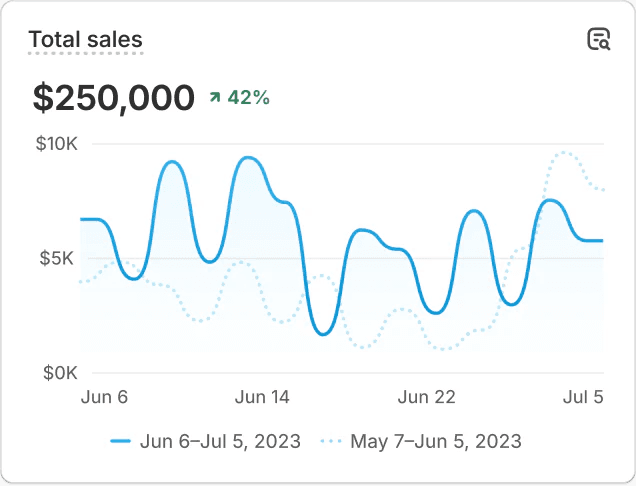
Shopify total sales chart showing 42 percent growth

TOTAL SALES VS. PREVIOUS PERIOD

+0%

+0%

+0%

+0%

+0%

+0%

Three men in summer fashion on a harbour quay

We build and grow digital platforms for brands that expect their commerce to perform, from fashion and beauty to mobility and consumer electronics. These are some of the companies we work with.

We build and grow digital platforms for brands that expect their commerce to perform, from fashion and beauty to mobility and consumer electronics. These are some of the companies we work with.

We build and grow digital platforms for brands that expect their commerce to perform, from fashion and beauty to mobility and consumer electronics. These are some of the companies we work with.

When you need a PIM

Attendees listening to a talk at a Flatline eCommerce event
Office entrance with a glass meeting booth
Two colleagues discussing work at their desks

Global disruptor in custom development & end-to-end production partner

WHEN PIM FITS

A PIM starts paying off when product data lives in spreadsheets, when a new market means redoing everything by hand, when marketplaces each demand their own format, or when nobody can say which description is current.

Family with two young children next to an electric cargo bike in front of a townhouse

When you need a PIM

Attendees listening to a talk at a Flatline eCommerce event
Office entrance with a glass meeting booth
Two colleagues discussing work at their desks

Global disruptor in custom development & end-to-end production partner

WHEN PIM FITS

A PIM starts paying off when product data lives in spreadsheets, when a new market means redoing everything by hand, when marketplaces each demand their own format, or when nobody can say which description is current.

Family with two young children next to an electric cargo bike in front of a townhouse

When you need a PIM

Attendees listening to a talk at a Flatline eCommerce event
Office entrance with a glass meeting booth
Two colleagues discussing work at their desks

Global disruptor in custom development & end-to-end production partner

WHEN PIM FITS

A PIM starts paying off when product data lives in spreadsheets, when a new market means redoing everything by hand, when marketplaces each demand their own format, or when nobody can say which description is current.

Family with two young children next to an electric cargo bike in front of a townhouse
Mystic, with product data connected to ERP and WMS

Who owns which product data

Most integration problems start with two systems that both believe they own the same field. Before connecting anything, we decide per attribute where it is created, where it is enriched and where it is only read. Typically the ERP owns article numbers, prices and stock, the PIM owns descriptions, specifications, images and translations, and Shopify owns merchandising: collections, sort order and content that only exists in the storefront.

  • ERP: article numbers, cost and sales prices, stock levels and logistics data

  • PIM: titles, descriptions, specifications, images, translations and channel-specific copy

  • Shopify: collections, product status, sales channels and storefront merchandising

  • Metafields: structured attributes such as material, care instructions or dimensions, typed and validated

  • Metaobjects: shared entries like size guides, ingredients or designers, maintained once and referenced by many products

  • Feeds: derived from the same data, never edited separately in a feed tool

The PIM connection and the ERP integration are designed as one data flow. That way a price update never overwrites a translated description, a new product only reaches Shopify once its required attributes are complete, and a sync error ends up in a log someone checks rather than on a live product page.

Choosing a PIM for Shopify

There is no best PIM, only one that fits your catalogue and your team. Akeneo, Salsify and Plytix are common examples. They differ in workflows and approvals, how they manage images and other assets, data modelling, pricing model and the maturity of their Shopify connector. A brand with a few thousand products and one content editor needs something different from a manufacturer with technical specifications in six languages.

We compare options on your own data, not on a feature list. How is a representative product modelled? How do variants map to Shopify options? How are translations and markets exported? And what happens when the connector runs into an API limit or a validation error halfway through a large update?

Sometimes the honest answer is that you do not need a PIM yet. Well-defined metafield definitions, a clear enrichment process and a spreadsheet import can carry a smaller catalogue for years. We say so when that is the case, and set up the metafields so a PIM can take over later without remodelling everything.

Markets, languages and channel feeds

Selling in several countries multiplies product data. With Shopify Markets you can vary language, currency, pricing and product availability per market, but the translated and localised content still has to come from somewhere. We connect the PIM so translations land on the right products, metafields and metaobjects in Shopify, and a missing translation is caught before a market goes live.

  • Translations per language, including content in metafields and metaobjects

  • Product availability and assortment rules per market

  • Google Merchant Center and Meta catalogue feeds from the same source

  • Marketplace exports with their own category and attribute requirements

  • Catalogues for Shopify B2B with their own assortment per company

  • Shopify’s standard product taxonomy and category attributes where they add value

Each channel receives the version it needs from one enriched record, mapped to that channel’s required fields. When Google or a marketplace rejects a product, the correction happens in the PIM rather than in a feed tool. That way the fix also reaches the storefront, the other markets and every future export.

How a PIM integration runs

  1. Product data audit. We analyse a sample of products across categories: which attributes exist, where they live, how complete they are and which fields each channel and market actually requires.

  2. Attribute model per category. We define families, attributes, validation rules and required fields per category and market, and decide which attributes become Shopify metafields, metaobjects or variant options.

  3. Ownership and workflow. Per attribute we record the leading system and the person responsible. We design the enrichment steps and the completeness rules a product must meet before it can go live.

  4. PIM selection or setup. Where no PIM is in place, we test the shortlisted options on real products. Where one exists, we review its configuration against the new model before building on it.

  5. Connection and migration. We configure or build the connector, migrate and clean existing data, and test updates, deletions, translations and error handling with representative products, not only the happy path.

  6. Go-live and governance. We switch channels over in a fixed order, monitor the sync logs and train editors. Afterwards we review completeness and errors periodically, so the model keeps pace with the catalogue.

Product data and integrations in practice

F.A.Q.

We’d love to answer all your questions

What does a Shopify PIM integration cost?

It depends on the size and complexity of your catalogue, the number of languages and markets, whether a standard connector fits or custom work is needed, and how much existing data needs cleaning. The PIM licence is a separate, recurring cost. After the audit we give a fixed scope and estimate, rather than a price range based on guesswork.

How long does a PIM implementation take?

Connecting an existing, well-structured PIM can be a matter of weeks. A new PIM with a fresh attribute model, data migration and several markets usually takes a few months. The data work, not the connector, tends to decide the timeline. That is why we start with an audit of your actual products.

What are the main risks of connecting a PIM?

The most common are two systems overwriting each other’s fields, incomplete products going live, variant structures that do not fit Shopify’s option model and sync errors nobody notices. We reduce them with a clear ownership model per attribute, completeness rules, tests on edge cases and logging that alerts a named person.

Can a PIM work alongside our ERP and other systems?

Yes, and it usually has to. The ERP typically keeps ownership of prices and stock, while the PIM handles content. Depending on the systems, data flows directly, through the PIM connector or via middleware. Per data stream we choose the route that is most reliable and easiest to maintain, including how errors are reported and retried.

What happens after go-live?

A PIM is never finished: new categories, markets and channels keep adding attributes. In the first weeks we monitor sync and feed errors, then review the data model and completeness periodically. You can keep changes to the model and connector with us on a retainer, or take ownership internally with the documentation and training we hand over.

F.A.Q.

We’d love to answer all your questions

What does a Shopify PIM integration cost?

It depends on the size and complexity of your catalogue, the number of languages and markets, whether a standard connector fits or custom work is needed, and how much existing data needs cleaning. The PIM licence is a separate, recurring cost. After the audit we give a fixed scope and estimate, rather than a price range based on guesswork.

How long does a PIM implementation take?

Connecting an existing, well-structured PIM can be a matter of weeks. A new PIM with a fresh attribute model, data migration and several markets usually takes a few months. The data work, not the connector, tends to decide the timeline. That is why we start with an audit of your actual products.

What are the main risks of connecting a PIM?

The most common are two systems overwriting each other’s fields, incomplete products going live, variant structures that do not fit Shopify’s option model and sync errors nobody notices. We reduce them with a clear ownership model per attribute, completeness rules, tests on edge cases and logging that alerts a named person.

Can a PIM work alongside our ERP and other systems?

Yes, and it usually has to. The ERP typically keeps ownership of prices and stock, while the PIM handles content. Depending on the systems, data flows directly, through the PIM connector or via middleware. Per data stream we choose the route that is most reliable and easiest to maintain, including how errors are reported and retried.

What happens after go-live?

A PIM is never finished: new categories, markets and channels keep adding attributes. In the first weeks we monitor sync and feed errors, then review the data model and completeness periodically. You can keep changes to the model and connector with us on a retainer, or take ownership internally with the documentation and training we hand over.

F.A.Q.

We’d love to answer all your questions

What does a Shopify PIM integration cost?

It depends on the size and complexity of your catalogue, the number of languages and markets, whether a standard connector fits or custom work is needed, and how much existing data needs cleaning. The PIM licence is a separate, recurring cost. After the audit we give a fixed scope and estimate, rather than a price range based on guesswork.

How long does a PIM implementation take?

Connecting an existing, well-structured PIM can be a matter of weeks. A new PIM with a fresh attribute model, data migration and several markets usually takes a few months. The data work, not the connector, tends to decide the timeline. That is why we start with an audit of your actual products.

What are the main risks of connecting a PIM?

The most common are two systems overwriting each other’s fields, incomplete products going live, variant structures that do not fit Shopify’s option model and sync errors nobody notices. We reduce them with a clear ownership model per attribute, completeness rules, tests on edge cases and logging that alerts a named person.

Can a PIM work alongside our ERP and other systems?

Yes, and it usually has to. The ERP typically keeps ownership of prices and stock, while the PIM handles content. Depending on the systems, data flows directly, through the PIM connector or via middleware. Per data stream we choose the route that is most reliable and easiest to maintain, including how errors are reported and retried.

What happens after go-live?

A PIM is never finished: new categories, markets and channels keep adding attributes. In the first weeks we monitor sync and feed errors, then review the data model and completeness periodically. You can keep changes to the model and connector with us on a retainer, or take ownership internally with the documentation and training we hand over.

Let’s talk about your product data

Tell us where your product data lives today and which channels and markets it feeds. We reply with a first view on the right PIM setup and how it connects to Shopify.

By signing up you agree with our privacy policy

What do they say

4.9 out of 5 · 145 reviews

Google reviews
Clutch reviews
Sortlist reviews
Shopify Partner Directory reviews

What do they say

4.9 out of 5 · 145 reviews

Google reviews
Clutch reviews
Sortlist reviews
Shopify Partner Directory reviews

What do they say

4.9 out of 5 · 145 reviews

Google reviews
Clutch reviews
Sortlist reviews
Shopify Partner Directory reviews

We’d love to hear about your project.

We’d love to hear about your project.

We’d love to hear about your project.