Lightspeed alternatives in 2026: costs, limits and how to move

By Robin Laseur
Lightspeed eCom started in Amsterdam as SEOshop, which Lightspeed bought in 2015. It still runs a large part of Dutch retail. According to Store Leads, 5,387 live Dutch webshops use Lightspeed: 30% of all 17,941 Lightspeed stores worldwide. That number is falling. Lightspeed lost 8% of its stores in the past year, and of the 149 merchants that left in the last 90 days, 95 moved to Shopify.
This guide explains which Lightspeed you are on, what it costs over three years compared with the alternatives, which limits you will hit, what happens to your stores and rankings, and how to plan a move week by week. We are a Shopify Platinum Partner, so we are not neutral. Every price and limit below comes from the vendors' own pages, and where Lightspeed is the better choice, we say so.
Prices and figures: status October 2026. Check VAT and current prices on the vendors' pages before you decide.
Key takeaways
5,387 Dutch webshops run on Lightspeed (Store Leads). The count fell 8% in a year, and 95 of the last 149 departures (64%) went to Shopify.
The C-Series has no end date in the Netherlands or Belgium. The upgrade to the E-Series is optional, free, and only offered to certain North American merchants.
The E-Series "upgrade" is a different platform (Ecwid). You get a new storefront, you redesign it, and your transaction history does not move.
Lightspeed eCom costs €68 to €259 a month. The C-Series caps you at 1 domain, 7 languages, 6 currencies, 6 filters and 25,000 variants.
For a webshop with €2 million revenue, Shopify Grow with an external payment provider costs €20,000 a year in platform fees. With Shopify Payments that fee disappears.
Shopify sells in up to 20 languages (30 on Plus) with a domain or folder per market, but allows only 3 options and 2,048 variants per product.
To be live before Black Friday 2027 (26 November), a mid-market migration starts by the end of February 2027.
Lightspeed in 2026: market data and direction
What the store counts show
The Netherlands is Lightspeed eCom's largest market: Store Leads counts 5,387 live Dutch stores, almost a third of the global total, down 8% in twelve months. Of the 149 merchants that left in the past 90 days, 95 went to Shopify. That pattern matters more than the totals: merchants that leave mostly choose the same destination.
Where Lightspeed is heading
In February 2025 Lightspeed finished a strategic review and chose two focus markets: retail in North America and hospitality in Europe. European retail, where most C-Series webshops sit, is not one of them. On 13 October 2026 the company cut 250 roles. Your webshop does not stop tomorrow: Lightspeed says the C-Series is still supported and updated. But for a platform choice for the next three to five years, the vendor's focus counts.
Which Lightspeed are you on?
"Lightspeed" covers several products. The right alternative depends on which one you have.
Lightspeed eCom C-Series
The former SEOshop platform, and what most Dutch and Belgian webshops run on. Plans are called Essential, Advanced and Professional, plus Enterprise on request. You find your plan in the eCom back office under Settings › General Settings › Your subscription. Product URLs on the C-Series end in .html, and extra languages sit in a language folder such as /de/ or /en/.
Lightspeed eCom E-Series
Based on Ecwid, which Lightspeed acquired in 2021. Lightspeed calls it its flagship eCommerce product. It is sold separately (Ecwid pricing) and included in the Lightspeed Retail POS plans. It works differently from the C-Series: it is built around the Ecwid "Instant Site" storefront, and plans are capped by number of products rather than variants.
Lightspeed Retail (R-Series and X-Series)
The point-of-sale system for physical stores. There are two versions, R-Series and X-Series, with different connectors. Check your contract, or ask Lightspeed, which one you have. Retail is often linked to one of the two webshops above. If you have stores, find out which version you run before you look at any alternative: it decides which integrations are possible.
What the E-Series "upgrade" really means
Lightspeed's upgrade FAQ is clear. The upgrade is recommended but optional, it is free, and the programme "is only available to certain North American merchants". Lightspeed moves settings, products and customers. Historical transaction data does not move. You get "a brand new Instant Site" and "will need to reimplement your storefront design".
So the upgrade is not the same as staying. New storefront, new design, new URLs, no order history: that is a re-platforming with the same name on the invoice. If you redesign and re-map URLs anyway, compare the E-Series with the other options on equal terms.
What Lightspeed actually costs
Lightspeed eCom C-Series prices on lightspeedhq.nl, status October 2026:
C-Series plan | Per month, billed yearly | Per month, billed monthly | Included |
|---|---|---|---|
Essential | €68 | €78 | 250 variants, 1 language, 1 user |
Advanced | €120 | €138 | 5,000 variants, 3 languages, 3 users |
Professional | €259 | €298 | 15,000 variants, 7 languages, B2B module |
Enterprise | on request | on request | Up to 65,000 products, higher API limits |
Lightspeed charges no transaction fee when you use an external payment provider. You pay your provider's rates, and apps from the Lightspeed app store on top.
The E-Series and Lightspeed Retail are priced separately:
Product | Per month, billed monthly | Per month, billed yearly | Included |
|---|---|---|---|
E-Series Starter | €5 | €5 | 10 products |
E-Series Venture | €35 | €29 | 100 products |
E-Series Business | €65 | €49 | 2,500 products |
E-Series Unlimited | €149 | €119 | Unlimited products |
Retail Basis | €129 | €99 | POS plus E-Series Venture |
Retail Essentieel | €189 | €149 | POS plus E-Series Business |
Retail Plus | €269 | €229 | POS, highest Retail plan |
The E-Series charges €0 in transaction fees. Ecwid raised its prices in March 2026. Sources: Lightspeed eCom pricing, Ecwid pricing and Lightspeed Retail pricing.
A three-year cost example
What counts is the total over the life of the platform. A worked example for a fictional but realistic Dutch webshop:
The assumptions
€2 million online revenue a year, average order €80: 25,000 orders a year.
Payment mix: 70% iDEAL (17,500 orders), 30% cards (7,500 orders, €600,000).
Range: about 8,000 variants, one market. That fits Lightspeed Professional.
Shopify rates from shopify.com/nl/prijzen, billed yearly: cards 1.8% + €0.25 on Grow, 1.6% + €0.25 on Advanced, 1.4% + €0.25 on Plus; iDEAL €0.29, or €0.15 on Plus. Platform fee with an external payment provider: 1% on Grow.
Apps, design and development are left out. They depend on your shop, and you budget them yourself on both sides.
The numbers
Scenario | Subscription, 3 years | Fees and payment costs, 3 years | Total, 3 years |
|---|---|---|---|
Lightspeed Professional, own payment provider | €9,324 | €0 platform fee + your provider's invoice | €9,324 + provider |
Shopify Grow, own payment provider | €2,124 | €60,000 platform fee + your provider's invoice | €62,124 + provider |
Shopify Grow, Shopify Payments | €2,124 | €53,250 payment costs | €55,374 |
Shopify Advanced, Shopify Payments | €10,404 | €49,650 payment costs | €60,054 |
Shopify Plus (3-year term), Shopify Payments | €75,600 | €38,700 payment costs | €114,300 |
How to read this
The Lightspeed row looks cheapest, but it is incomplete: your payment provider also charges for those 25,000 orders. The honest comparison is your provider's invoice for the past twelve months against €17,750 a year: Shopify Payments on Grow in this example.
Three things stand out. First, Shopify with an external payment provider is the expensive route: the 1% fee alone costs €20,000 a year. Second, Advanced does not pay for itself here. It costs €2,760 a year more than Grow and saves €1,200 on card fees. Third, Plus is not a cost decision at this size; it pays off when you need what only Plus offers. More on costs in what Shopify really costs.
The hard limits side by side
The published limits that matter most when you leave Lightspeed:
Limit | Lightspeed C-Series | Shopify (Basic to Advanced) | Shopify Plus |
|---|---|---|---|
Domains | 1 per shop | Domain or folder per market | Domain or folder per market, plus 9 expansion stores |
Languages | 7 (Professional) | 20 | 30 |
Currencies | 6 | Local currency per market | Local currency per market |
Variants in total | 25,000 (15,000 when linked to Retail) | No store limit on products | No store limit on products |
Variants per product | 100 | 2,048, with max. 3 options | 2,048, with max. 3 options |
Images per product | 10 | 250 media | 250 media |
Filters | 6, with 15 values each | Filters on options and metafields | Filters on options and metafields |
Redirects | 25,000 | 100,000 | 20 million |
B2B | B2B module (Professional) | 3 active B2B catalogues | Unlimited catalogues |
API | 300 requests per 5 min, 3,000/hour, 12,000/day | Admin API rate-limited; no limit on buyer traffic via the Storefront API | Same, higher Admin limits |
Two limits decide most cases. The cap of 12,000 API requests a day is shared by your ERP sync, PIM feed and marketplace connector; a catalogue of 10,000 variants with stock changes several times a day uses it up fast. On the Shopify side, it is three options per product: if products vary on size, colour, length and material, one of them needs a different model, such as separate products linked with a metafield.
Multi-language and multi-country: C-Series versus Shopify Markets
This is where most C-Series merchants feel the ceiling first. The C-Series gives you one domain per shop. All languages sit in folders on that domain, and Essential has one language, Advanced three, Professional seven. You can show six currencies, but you cannot give Germany its own domain, its own price list and its own assortment in one shop.
On Shopify, a market is a country or a group of countries with its own language, currency, prices, catalogue and domain or folder. One store can serve the Netherlands on .nl, Belgium in Dutch and French, and Germany on .de. You can sell in up to 20 languages, or 30 on Plus (Shopify Help Center). Our rule: same brand in another country means one store with a market per country, not a second store. Brands that split per country regret it. Brands that split per brand rarely do.
Two caveats. Managed Markets, where Shopify acts as merchant of record, requires a merchant in the US, Canada or the UK. And someone has to write and maintain translations: start with the markets that pay, add languages after go-live.
The alternatives compared
Option | Best for | Price from (per month) | Watch out for |
|---|---|---|---|
Shopify | Growing brands that want SaaS, apps and a strong checkout | €21 | Platform fee without Shopify Payments; 3 options per product |
Shopify Plus | Several markets, B2B, high volume, many stores | €2,100 (3-year term) | One brand per contract; only pays off at scale |
Lightspeed E-Series | Small ranges, often with Lightspeed Retail | €29 (yearly) | New storefront and design; product caps per plan |
CCV Shop | Dutch SMEs that want Dutch support | €36 excl. VAT | Smaller ecosystem; less suited to international growth |
Mijnwebwinkel | Starters and small shops | €20 excl. VAT | Not built for scale or several markets |
Shopware 6 | Brands that want to own code and hosting, often B2B or DACH | Free (Community) / €600 (Rise) | Hosting, updates and developers are yours |
WooCommerce | Content-led sites with a WordPress team | Free plugin | Hosting, plugins, updates and security are yours |
Shopify
For whom: growing brands that want a hosted platform and a broad app ecosystem. Cost: Basic €21, Grow €59, Advanced €289 a month, billed yearly. Strengths: 16,000+ apps, Markets for countries and languages, Shopify POS, no hosting or updates. Limits: 3 options and 2,048 variants per product, 250 metafield definitions, a platform fee of 2% to 0.6% with an external payment provider, and no access to the core.
Shopify Plus
For whom: several markets, B2B next to B2C, stores or high volume. Cost: from €2,100 a month on a 3-year term, €2,250 on a 1-year term, or a variable platform fee. Strengths: unlimited B2B catalogues, 9 expansion stores, POS Pro for 20 locations, checkout customisation, 30 languages. Limits: one brand per contract. Ask in writing whether the fee is fixed or variable. See Shopify Plus.
Lightspeed E-Series
For whom: small ranges, especially if you already pay for Lightspeed Retail: Basis includes Venture (100 products) and Essentieel includes Business (2,500 products). Cost: €29 to €119 a month billed yearly, €0 transaction fees. Strengths: one vendor for till and webshop. Limits: product caps, a new storefront to redesign, no C-Series order history, and no guided upgrade in the Netherlands.
CCV Shop
Dutch SMEs that want Dutch support, €36 to €129 a month excl. VAT. The ecosystem is much smaller than Shopify's and it is less built for several countries. If the multi-country ceiling is why you leave Lightspeed, check this first.
Mijnwebwinkel
Starters and small shops, €20 to €70 a month excl. VAT. Simple and cheap, but not built for large catalogues, stores or several markets. For merchants that outgrew the C-Series, it is a step back.
Shopware 6
For whom: brands that want to own code and hosting, often B2B-heavy or focused on Germany, Austria and Switzerland. Cost: Community Edition free, Rise €600 and Evolve €2,400 a month. Above €1 million GMV a paid plan is required for Store and Account access. Strengths: open source, flexible data model. Limits: hosting, updates, security and developers are yours; the running effort goes up, not down.
WooCommerce
For content-led sites with a WordPress team. The plugin is free; hosting, premium plugins and maintenance are not. Every plugin is a dependency you update and secure yourself, and for retailers with stores the till integration is a separate project.
Your stores: keep Lightspeed Retail or move to Shopify POS?
For retailers with physical stores, the till decides much of the route. Lightspeed Retail can stay, or the stores move to Shopify POS. Both work. What does not work is two systems that each think they own stock or customers.
Option 1: keep Lightspeed Retail and connect it
Lightspeed offers its own Lightspeed Retail + Shopify integration that syncs products and stock. Third-party connectors exist too: Patchworks for the X-Series and SyncSpider for the R-Series. Staff keep a till they know; the price is a connector to maintain. Lightspeed Retail costs €99 to €229 a month billed yearly.
Option 2: move the stores to Shopify POS
With Shopify POS, online and in-store sales share one stock, one customer profile and one set of reports. Click and collect and in-store returns of online orders then work without a connector. Shopify POS Pro costs €79 per location per month. Shopify Plus includes POS Pro for up to 20 locations.
Match SKUs and barcodes first
Whatever you choose, the SKU is the key. Freeze SKUs before the export, and give every variant the same SKU and barcode in Lightspeed Retail and Shopify. A variant without a match is a product that sells online while the store already sold the last one.
One owner per object
Our Floor Plan gives each object exactly one owner system. Stock per location belongs to the till or the WMS, master prices to the ERP. The POS order uses the same stock and customer as online: no second customer file. Every object with two owners is integration scope and a future bug.
Webshop first, stores later
Many brands move the webshop first and the stores later, so the team learns one system at a time. Keep Lightspeed Retail connected for the first months, measure stock accuracy, and move the tills when the webshop runs quietly.
The decision: three questions and a matrix
The Breakup Talk
Three questions, one meeting, twelve months of invoices on the table:
Question | Red when |
|---|---|
Version: how old is your version? | Standard support ends within twelve months, or already has |
Ceiling: what are you running into? | One of the three things your plan needs in the next twelve months requires a rebuild instead of a release |
Cost: what does one change cost? | The median lead time of your last ten change requests is longer than four weeks |
No red answers: stay and invest in conversion, margin and marketing. One red: fix that one thing, such as the plan or the theme. Do not move a whole store for one issue. Two or more: move. For most C-Series merchants the version question is not red, so the ceiling decides. Let the merchandiser and the marketer answer it, not the developer: they hit the ceiling every week.
The decision matrix
Your situation | Usually the best fit |
|---|---|
One market, 3 languages or fewer, under 5,000 variants, integrations within the API limits | Stay on the C-Series |
Small range, stores on Lightspeed Retail, simple webshop | E-Series through your Retail plan |
Growing brand, several countries, own domain per country | Shopify with Markets |
B2B next to B2C, several stores, high volume | Shopify Plus with POS |
Own developers, B2B-heavy, DACH focus, wants to own the code | Shopware 6 |
Small Dutch shop that wants Dutch support | CCV Shop or Mijnwebwinkel |
When we advise against Shopify
We say so before anyone signs:
Configurators. 3 options, 2,048 variants and 250 media per product. Build the configurator on the Storefront API, or stay.
Complex B2B pricing. Tiers and approval flows are not Shopify objects. If the ERP cannot deliver a price per customer per line, do not start.
House of brands. Plus is one brand per contract. Four brands means four contracts.
And three moments when we say no to any migration: in the middle of a rebrand, during an ERP switch in the same quarter, and when there is less time to Black Friday than the build needs.
The migration plan, step by step
The detailed route is on our Lightspeed to Shopify page and in the Lightspeed migration guide. This is the method behind it.
Count back from Black Friday 2027
Black Friday 2026 is too close. The next one is Friday 26 November 2027, and counting back from a date that does not move is the only plan that holds:
Phase | Duration | For Black Friday 2027 |
|---|---|---|
Scan and choose a partner | 6 weeks | Start by 26 February 2027 |
Baseline, Moving Box, scope freeze | 4 weeks | |
Build, migration, testing | 20 weeks (mid-market catalogue, two integrations) | |
Go-live and hypercare | 6 weeks | Live by about 24 September 2027 |
Code freeze | 3 weeks | From 5 November 2027 |
Start in May and hypercare lands on top of the freeze. Put a name next to the freeze: someone has to be allowed to say no in week 46.
The Moving Box: keep, improve or bin
Every page, template, app, field, integration and URL gets exactly one label, with a name, before the scope freeze:
Keep: it earns money now, or the law says you keep it. Products, variants, stock, customers with consent, 24 months of orders, URLs with a click in 16 months.
Improve: it works, and the new platform makes it better. Filters, language versions, product data, checkout and payments.
Bin: nobody knows the week it last made money. Apps nobody opens, pages without sessions, discount codes from years ago.
An empty row is a bin row. An "improve" without a sentence on what better means falls back to keep.
The Data Manifest for Lightspeed
Migrations fail more often on data than on design. The manifest records where each field lands:
Lightspeed | Shopify | Action | What the row decides |
|---|---|---|---|
Products and variants | Product and ProductVariant | Improve | Variant titles become option values; max. 3 options per product |
SKU and barcode | Variant SKU and barcode | Keep | The key for stock, till, ERP and feeds. Freeze before export |
Specifications and filters | Metafields | Improve | 250 definitions; create them first, then filter on them |
Categories | Collections and menus | Improve | Categories that only carry a filter become a metafield |
Brands and brand pages | Vendor plus a collection per brand | Keep | Brand pages often rank; they need their own redirect |
Translations per language | Translations per market | Improve | Every language folder gets its own redirects |
Customers | Customers | Keep | Email, addresses, tags, marketing consent. No passwords |
Orders | Orders via the API | Manual | No CSV route; decide how many years move |
Reviews | The review app, or nothing | Improve | Only the importer of the review app moves reviews |
Existing redirects | URL redirects | Keep | Flatten old chains: one hop from oldest URL to new |
Passwords never migrate. With Shopify's new customer accounts, customers log in with a one-time email code. Import order: products, customers, orders.
Three runs, never one
Dry run in a development store: which fields arrive empty.
Dress rehearsal on the real store with the full set: how long the import takes. You build the go-live hour on that number.
Delta after the freeze. Size: orders per year ÷ 8,760 × hours frozen. For our example shop: 25,000 ÷ 8,760 × 4 hours is about 11 orders.
Agree the tolerance in advance (orders and customers to the unit, gross revenue to the euro) and count five totals on both sides: customers, products, variants, orders, gross revenue.
The redirect matrix for Lightspeed URLs
Every URL changes. Lightspeed product pages end in .html. On Shopify, products move to /products/ and categories to /collections/. Language versions move from Lightspeed's language folder to the folder or domain of the Shopify market. The rules we use:
Collect every URL that ever returned a 200: a crawl, the sitemaps per language, and 16 months of Search Console data. Export now: older data is gone.
Sort by clicks, then by referring domains. A person chooses the target for everything with a click or link; the rest gets a pattern rule.
Map per language: /de/product-name.html goes to the German product page, not the Dutch one.
Lightspeed caps product URLs at 50 characters. A fuller Shopify handle needs an explicit mapping.
Flatten the redirects you already have on Lightspeed (up to 25,000). Oldest URL to new URL in one hop, no chains.
A dead product page goes to its collection. Search and filter URLs get a 410. Never the homepage: Google reads that as a soft 404.
Go-live, hour by hour
T−7 days: decide whether rollback is possible. The old shop keeps serving, DNS TTL goes to 300 seconds 48 hours before, and no order lands on the new shop that the old one cannot see.
T−2 hours: go/no-go. One owner, four criteria, one decision.
T−1 hour: the Lightspeed shop stops taking orders.
T−0: A record and CNAME switch, password off.
T+15 minutes: one paid order per payment method, then a refund.
T+60 minutes: 50 old URLs by hand, then the full map.
T+2 hours: compare the counters with the same hour last week.
Never on a Friday; on call until T+72 hours. Roll back on four criteria only: the main payment method takes nothing, orders do not reach the ERP, customer data leaks between accounts, or prices or stock are wrong across the catalogue.
The Silence Test
A go-live succeeded when your customers notice nothing. For 72 hours, five counters stay level, compared hour by hour with the same weekday a week earlier: orders per hour, checkout conversion, failed payments per method, 404s per 1,000 sessions and support tickets per 1,000 sessions. One counter out of line for 30 minutes is an incident. Two at once sends you back to the rollback criteria.
The first 90 days
Week 1: the build team stays on. Weeks 2 to 4: fifteen minutes every morning on the five counters. Weeks 5 to 12: weekly. If a number dips, check tracking, redirects, feeds, payments, season and search, in that order; most dips stop at the first two. The measure that counts is margin per visitor against the same months last year.
Dutch specifics you should not forget
iDEAL | Wero
iDEAL | Wero is used for 73% of Dutch online purchases (Betaalvereniging, first half of 2026). By the end of 2027 every iDEAL merchant has moved to Wero. Check that your new platform and payment provider support both during the transition. Do not let an agency choose your payment mix: iDEAL | Wero goes first.
Reviews and trust marks
Import your reviews, for example from Kiyoh, into the review app on the new platform, and put your trust marks such as Thuiswinkel Waarborg back in the new shop before go-live. Lightspeed product reviews only move if your new review app's importer can read them: test it in the dry run.
CCD2 and buy now, pay later
From 20 November 2026 the new Consumer Credit Directive (CCD2) applies to buy now, pay later in the EU: creditworthiness checks, age checks and supervision by the AFM in the Netherlands. If you offer pay-later options, check how your provider handles this on the new platform.
European Accessibility Act
Since 28 June 2025 the European Accessibility Act applies to webshops in the EU. A migration is the moment to build accessibility into the new theme instead of patching it later.
Mistakes we see most
Copying the old shop one to one. You get the old limits back on a new platform.
Skipping the baseline. Without twelve months of data measured before the build, you cannot tell whether the move worked.
Sending old URLs to the homepage. Google treats that as a soft 404.
Letting the agency choose the payment mix. On Shopify, that choice moves your costs by tens of thousands of euros, as the example above shows.
Going live on a Friday. It is on our own list of mistakes: problems surface when nobody is around.
Stopping at go-live. The first 90 days decide whether the move pays back.
Cases: retailers that left Lightspeed
Malelions
Malelions moved from Lightspeed to Shopify Plus with us. We migrated more than 180,000 customers. The brand needed more than 40 custom sections, and three brands of the group now run on one codebase.
NØORDCODE.
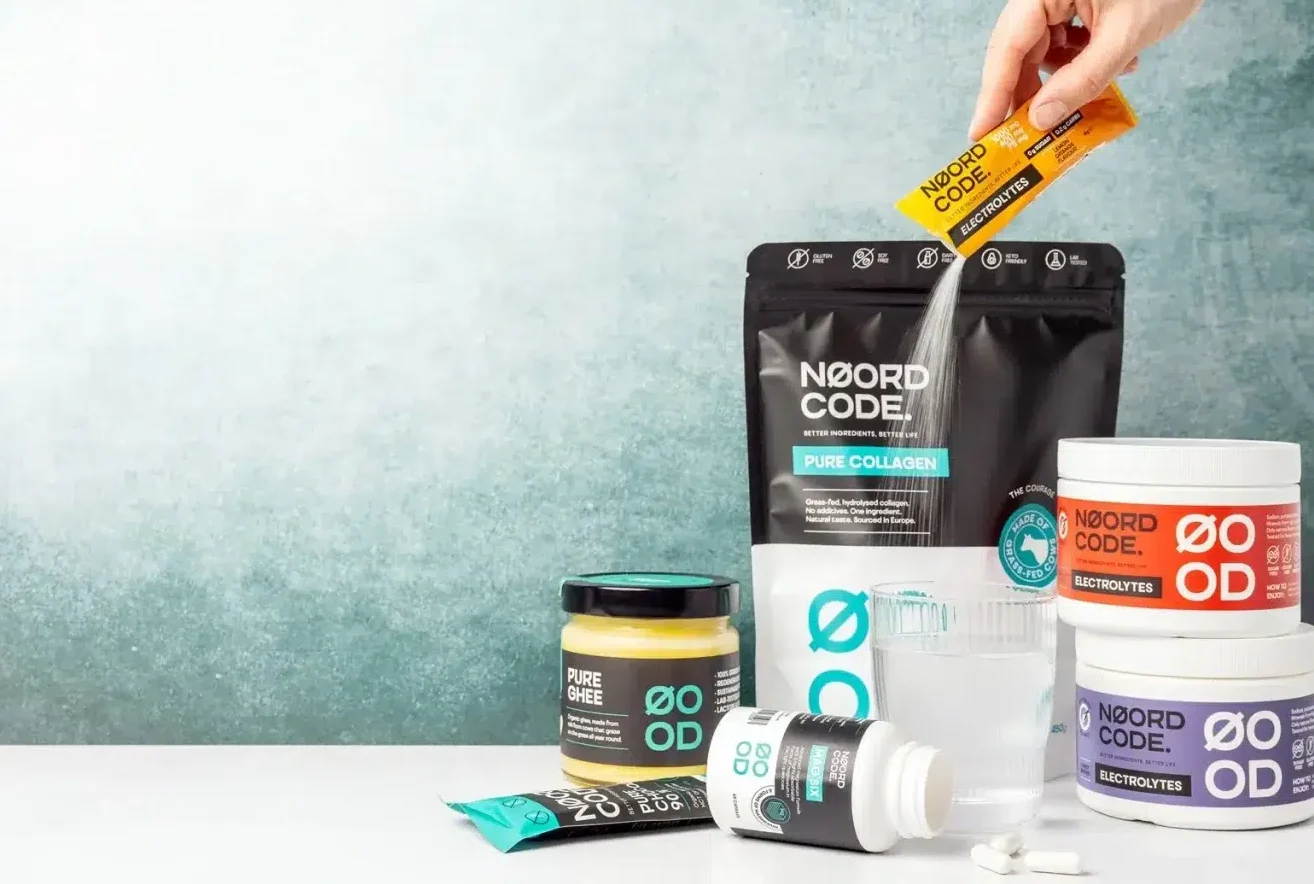
NØORDCODE. moved from Lightspeed to Shopify Plus with us, with Shopify Markets for its international sales.
Stoov and OGÉR
Not Lightspeed, but the same questions. Stoov merged four stores into one Plus store with Markets: +13% conversion, +50% site speed. OGÉR moved to Shopify Plus with POS, 2+ ERP and WMS connectors and 3+ custom POS apps; its CCO reported 45% more revenue after go-live.
Our view
Most growing retailers that leave the C-Series end up on Shopify, and the Store Leads data shows the same. Not because Lightspeed is bad, but because limits on domains, languages, filters and API calls start to cost growth.
We are not neutral. Still: if you sell in one market, need three languages or fewer, fit within 5,000 variants, your stores run well on Lightspeed Retail and your integrations stay within the API limits, staying on the C-Series is a sound choice. Look again when you plan new countries or wholesale. Feature by feature: Shopify vs Lightspeed.
And if two of the three Breakup Talk questions come back red, start counting back from November 2027 now.
Outgrowing Lightspeed? See how we move Lightspeed stores to Shopify →
Related articles



F.A.Q.

Is Lightspeed eCom C-Series being discontinued?
Not according to Lightspeed. Its help centre calls the upgrade to the E-Series recommended but optional and says the C-Series is still supported. The upgrade programme is limited to certain North American merchants, and there is no end date for the Netherlands or Belgium (status October 2026).
Is upgrading to the Lightspeed E-Series the same as staying on Lightspeed?
No. The E-Series is based on Ecwid, a different platform. According to Lightspeed's own FAQ you get a brand new Instant Site, you have to reimplement your storefront design, and historical transaction data does not move. That makes it a re-platforming, so compare it with other options on equal terms.
How do I know which Lightspeed I have?
In the Lightspeed eCom back office, go to Settings, General Settings, Your subscription: C-Series plans are called Essential, Advanced, Professional or Enterprise. C-Series product URLs end in .html. For the till, your Lightspeed Retail contract tells you whether you run the R-Series or the X-Series.
Is Shopify more expensive than Lightspeed?
Not on subscription: Shopify Grow costs €59 a month billed yearly, Lightspeed eCom Professional €259. The difference is in payment costs. With an external payment provider Shopify adds 2% to 0.2% per order, so compare your current provider invoice with Shopify Payments, where iDEAL costs €0.29 per transaction (€0.15 on Plus).
Can I keep Lightspeed Retail in my stores if my webshop moves to Shopify?
Yes. Lightspeed offers a Lightspeed Retail + Shopify integration that syncs products and stock, and third-party connectors such as Patchworks (X-Series) and SyncSpider (R-Series) exist too. Matching SKUs and barcodes in both systems is the main requirement. Many brands move the webshop first and the tills later.
Can I sell in several countries and languages on Lightspeed?
Within limits. The C-Series allows one domain per shop, up to 7 languages on Professional and 6 currencies, so countries share one domain. Shopify lets you sell in up to 20 languages, or 30 on Plus, with a domain or folder, currency and price list per market in one store.
Do I lose my Google rankings when I leave Lightspeed?
Not if the move is planned well. Lightspeed product URLs end in .html and change to /products/ on Shopify, so every indexed URL, including language folders and brand pages, needs a one-hop redirect to its closest new page. No one can promise unchanged rankings, but a complete redirect map prevents the avoidable losses.
When should I start a Lightspeed migration to be ready for Black Friday 2027?
Count back from 26 November 2027. A mid-market migration takes about 36 weeks of work, from choosing a partner to hypercare, before a code freeze from 5 November. That means starting by the end of February 2027 and going live around late September.