AMS01:00
AMS01:00
AMS01:00

eCommerce ﹥ BigCommerce to Shopify

FROM BIGCOMMERCE TO SHOPIFY, WITHOUT LOSING DATA OR RANKINGS

BigCommerce is a solid SaaS platform, but since June 2026 its plans get more expensive as you grow: lower sales thresholds and a new fee on payment providers outside its own list. Flatline moves brands from BigCommerce to Shopify and Shopify Plus, including products, variants and modifiers, customers, orders and B2B accounts, with a redirect plan for every URL.

Malelions homepage on desktop
Malelions homepage on mobile
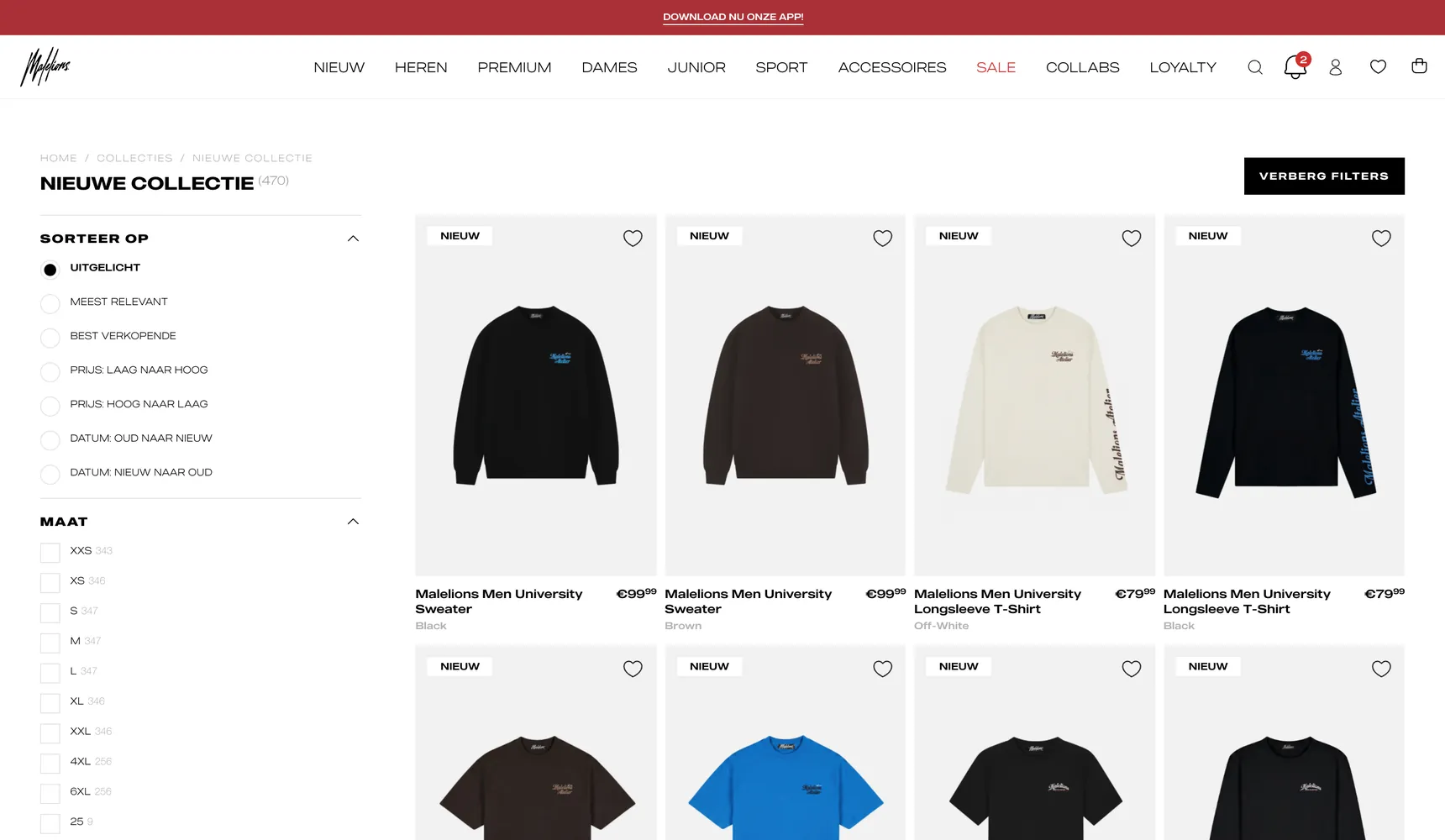
Collection page of the Malelions webshop
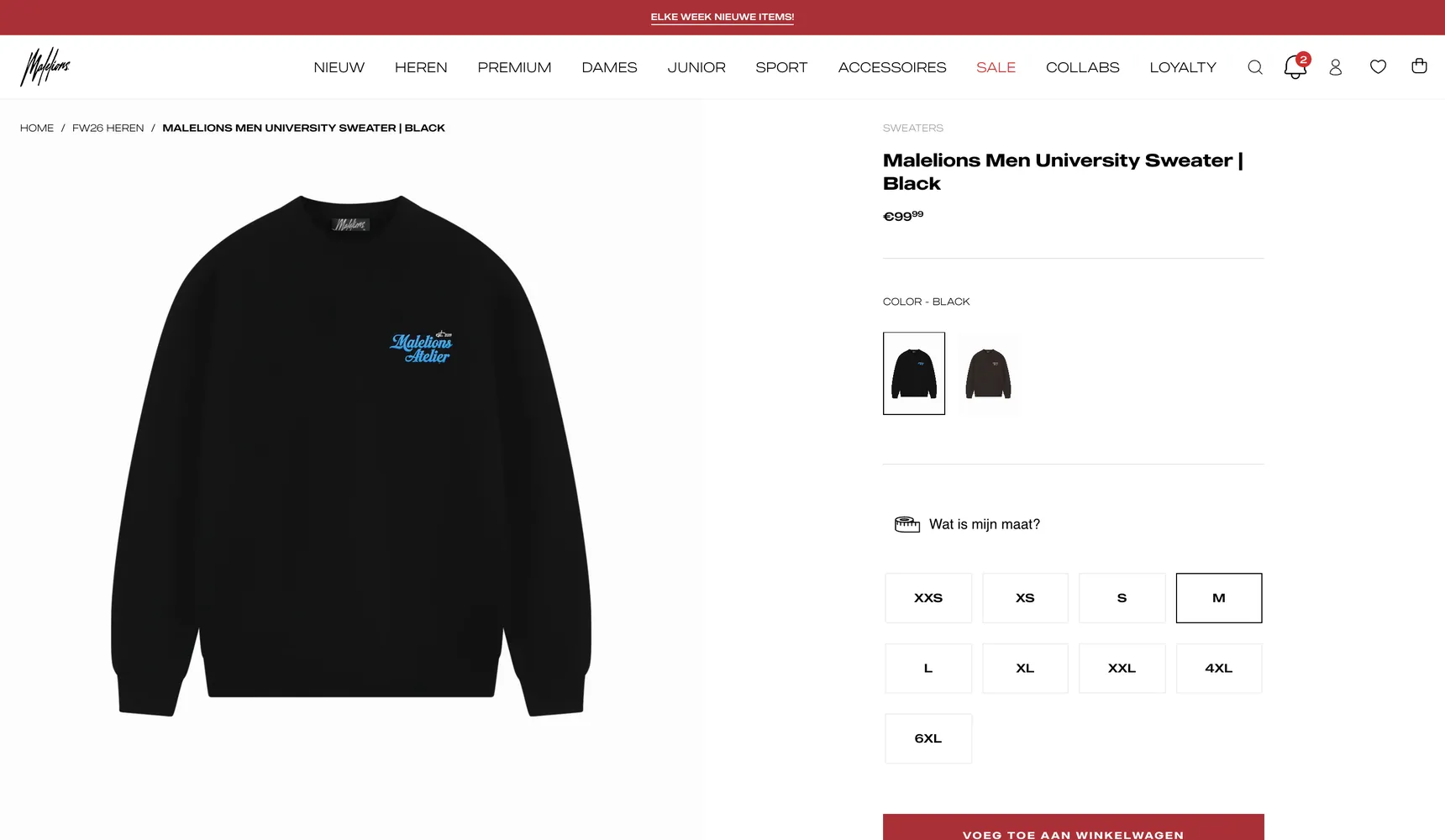
Product page of the Malelions webshop

What a BigCommerce migration plan covers

We start with what your BigCommerce store actually does: products with variants and modifiers, customer groups and price lists, B2B Edition, storefronts, apps, and the Stencil or Catalyst front end. Each part gets a decision: move it, rebuild it on Shopify, replace it with an app or retire it. Then follow the URL map and redirects, the migration of products, customers and orders, tracking and feeds, and QA on real processes, from checkout to B2B orders.

PROVEN
RESULTS
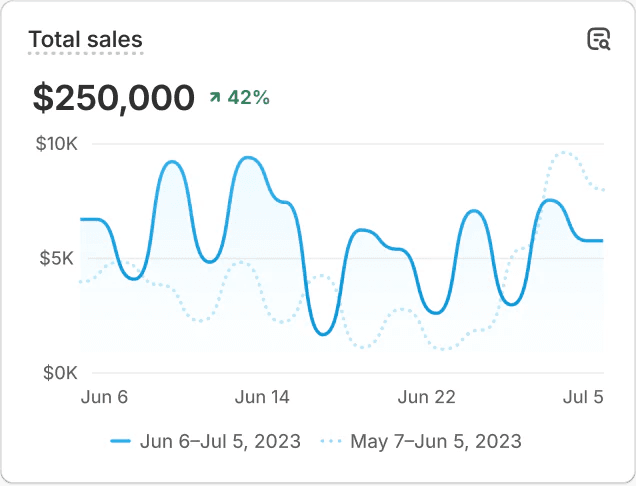
Shopify total sales chart showing 42 percent growth

TOTAL SALES VS. PREVIOUS PERIOD

+42%

+42%

+42%

+42%

+42%

+42%

Three men in summer fashion on a harbour quay

We build and grow digital platforms for brands that expect their commerce to perform, from fashion and beauty to mobility and consumer electronics. These are some of the companies we work with.

We build and grow digital platforms for brands that expect their commerce to perform, from fashion and beauty to mobility and consumer electronics. These are some of the companies we work with.

We build and grow digital platforms for brands that expect their commerce to perform, from fashion and beauty to mobility and consumer electronics. These are some of the companies we work with.

When moving from BigCommerce to Shopify makes sense

Attendees listening to a talk at a Flatline eCommerce event
Office entrance with a glass meeting booth
Two colleagues discussing work at their desks

Global disruptor in custom development & end-to-end production partner

WHEN TO LEAVE BIGCOMMERCE

BigCommerce or Shopify is mostly a question of cost as you grow. Since 1 June 2026, BigCommerce upgrades its self-serve plans automatically at lower sales levels: Core at $30K and Growth at $100K in trailing twelve-month sales (previously $50K and $180K), Scale charges 0.9% above $33,333 a month and moves to Performance at $2M. On top of that comes a fee of 2.0%, 1.0% or 0.6% on orders through payment providers outside BigCommerce's embedded list. Shopify's standard plans have no sales cap, but Shopify also charges a fee if you don't use Shopify Payments, so compare both on your own numbers (as of October 2026). Staying is the better choice on a Performance contract with good terms, or when B2B Edition and Multi-Storefront already do exactly what you need.

Family with two young children next to an electric cargo bike in front of a townhouse
Malelions storefront after the Lightspeed to Shopify Plus migration

What moves from BigCommerce, and how

BigCommerce and Shopify structure a catalogue differently. We map every part to its Shopify counterpart before anything is imported:

  • Products with variants move as products with variants. BigCommerce allows 600 variants per product, Shopify 2,048 but only three options, so products with more options are restructured.

  • Modifiers, such as engraving text, checkboxes or add-ons, have no SKU and no one-to-one Shopify equivalent. They become line item properties, bundles or separate products.

  • Categories become collections. Custom fields become metafields, with the storefront filters rebuilt on top of them.

  • Customer accounts, addresses and customer groups move. Passwords do not: BigCommerce cannot export them, so we plan activation emails or passwordless login.

  • Orders export from BigCommerce as CSV or through the API, but Shopify only accepts historical orders through its API. We decide with you how many years go along.

  • Reviews move through the importer of your review app; trust badges are placed back in the new store.

We have no BigCommerce case to show yet. The brands below, such as Malelions, OGÉR, Mason Garments and NØORDCODE., moved to Shopify from other platforms with the same method.

For every step in detail, read our guide BigCommerce to Shopify migration.

Apps, B2B Edition and integrations

A BigCommerce store leans on apps and, for larger merchants, on B2B Edition and Multi-Storefront. Each part gets a decision: covered by Shopify itself, replaced by an app, rebuilt as a custom app, or retired:

  • B2B Edition: company accounts, account hierarchy, price lists and payment terms map to Shopify B2B with companies, locations and catalogs. Shopify allows three active B2B catalogs on Basic, Grow and Advanced, unlimited on Plus. Quotes, shopping lists and the invoice portal need draft orders, an app or custom work.

  • Multi-Storefront: BigCommerce runs up to eight Stencil storefronts from one control panel, depending on the plan. On Shopify that becomes Markets in one store, or expansion stores on Plus (main store plus nine).

  • Stencil themes are built in Handlebars and do not transfer. The storefront is rebuilt as a Shopify theme, or headless with Hydrogen if you now run Catalyst on Next.js.

  • ERP, PIM, WMS and marketing connections get a data owner, sync frequency and error handling, tested before launch.

See Shopify B2B, headless Shopify and Shopify integrations. Still comparing the two platforms? Read BigCommerce vs Shopify.

Shopify or Shopify Plus: which plan fits follows from the scan, not from your current licence. See what Shopify Plus adds for larger brands.

BigCommerce URLs and SEO

Depending on the URL setting, BigCommerce product URLs look like /product-name, /products/product-name or /category/product-name, and category URLs like /category-name or /categories/category-name. On Shopify, products live under /products/, categories under /collections/ and pages under /pages/. That makes the redirect map the most important SEO deliverable of the project:

  • We crawl every indexable URL and collect the existing 301 redirects in BigCommerce, so old chains are shortened instead of extended.

  • Each old URL goes to its closest new page, never to the homepage by default.

  • Even on the long setting, where products already sit under /products/, we check every handle: one character difference is a 404.

  • Brand pages, blog posts, web pages and filter URLs with traffic get their own place in the map.

  • After launch we compare per template and folder, so a drop is found where it starts.

Shopify allows up to 100,000 redirects on its standard plans and 20 million on Plus, and only from URLs that no longer exist. BigCommerce’s root-level URLs don’t exist on Shopify, so redirects can catch them, provided the map is built and tested before launch.

Approach

We work in fixed phases, so you know at every point what has been decided and what is still open:

  • Migration audit: data, apps, B2B Edition, storefronts, URLs and processes, with scope and risks per decision.

  • Solution design: Shopify or Shopify Plus, data model, markets and the role of apps versus custom work.

  • Design and build, delivered in reviewable parts.

  • Trial migrations with real data, to measure completeness and duration.

  • QA on real processes: orders, payments, B2B orders, returns and tracking.

  • Cutover with data freeze, final sync and redirects, followed by monitoring after launch.

Plan backwards from your peak. To sell on Shopify on Black Friday 2027 (26 November), we count six weeks for the scan, four for scope, about twenty for build, migration and testing, and six for launch and hypercare, followed by a code freeze from early November. In practice: the decision has to be made in February 2027.

We migrate in three runs, never one: a dry run in a development store to find fields that arrive empty, a dress rehearsal with the full data set to time the import, and a delta run after the freeze. After launch our hypercare runs 90 days, starting with daily checks of orders per hour, checkout conversion, failed payments per method, 404s and support tickets.

Brands we moved to Shopify Plus

F.A.Q.

We’d love to answer all your questions

BigCommerce or Shopify: which is better?

Both are SaaS platforms, and neither is better for every brand. BigCommerce is strong in B2B Edition and Multi-Storefront, but since June 2026 its self-serve plans upgrade at lower sales levels and add a fee of up to 2.0% for payment providers outside its list. Shopify's standard plans have no sales cap, but charge a fee if you don't use Shopify Payments. Compare both on your own sales, payment mix and B2B needs.

Can customer accounts and passwords move from BigCommerce?

Customer accounts, addresses and order history move. Passwords do not: BigCommerce itself cannot export them, and Shopify cannot import password hashes from another platform. Customers activate their account through an invitation email, or log in with a one-time code if you use Shopify's new customer accounts.

What happens to our variants and modifiers?

Variants move as Shopify variants. BigCommerce allows 600 variants per product and Shopify 2,048, but Shopify has a limit of three options per product, so products with more options are restructured. Modifiers such as engraving text or add-ons have no SKU and no direct Shopify equivalent; they become line item properties, bundles or separate products.

Do we lose our Google rankings?

Not if the move is planned well. BigCommerce product and category URLs usually sit at the root, such as /product-name and /category-name, and change to /products/ and /collections/ on Shopify. Each indexable URL needs a redirect to its closest new page. No one can promise unchanged rankings, but a complete redirect map prevents the losses that are avoidable.

We use B2B Edition or Multi-Storefront. Do we need Shopify Plus?

Often, yes. Shopify B2B works on every plan with three active B2B catalogs, but unlimited catalogs, expansion stores and checkout customisation come with Plus. A brand with one storefront and a small B2B share often does well without Plus. We look at your plans for the coming years and advise the plan that fits.

Planning to leave BigCommerce?

Tell us your BigCommerce plan and sales level, whether you use B2B Edition, Multi-Storefront or Catalyst, which apps you rely on and your timing. We reply with a first view on scope, risks and the route to Shopify, and suggest a short call to walk through it.

By signing up you agree with our privacy policy

What do they say

4.9 out of 5 · 145 reviews

Google reviews
Clutch reviews
Sortlist reviews
Shopify Partner Directory reviews

What do they say

4.9 out of 5 · 145 reviews

Google reviews
Clutch reviews
Sortlist reviews
Shopify Partner Directory reviews

What do they say

4.9 out of 5 · 145 reviews

Google reviews
Clutch reviews
Sortlist reviews
Shopify Partner Directory reviews

We’d love to hear about your project.

We’d love to hear about your project.

We’d love to hear about your project.